
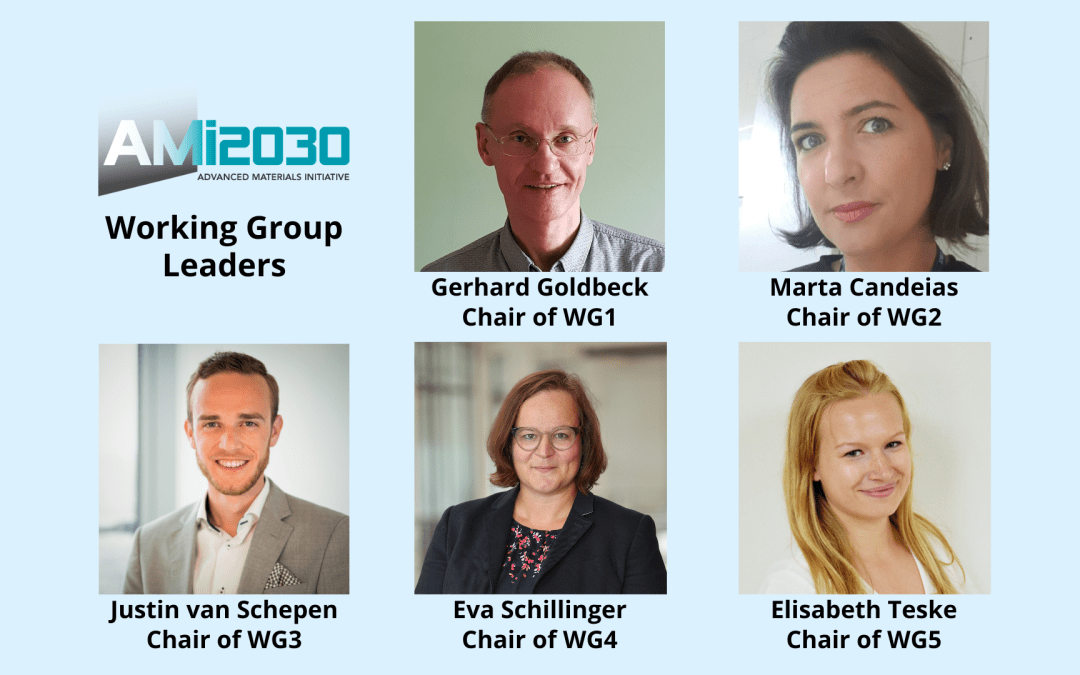
With the establishment of interim governance for AMI2030, 5 working groups were created. These working groups provide the framework for the content-related work of the experts along the 5 core topics of the initiative. Below, the leaders of the working groups provide a brief snapshot of the content and what has been achieved so far.
WG1 – Materials Digitalization
“Materials Digitalisation involves the creation of a common data space covering all types of activities in the materials life cycle, from design to closing-the-loop. The Working Group has addressed this challenge by considering four cyclical stages of Generating, Documenting , Managing and Exploiting Data. Involving a wide range of experts contributing via survey, Working Group as well as several sub-team meetings, the equal importance of actions supporting these stages to create an impactful system have been validated and key priorities have been elaborated.”
(Gerhard Goldbeck, Chair of WG1, Executive Secretary EMMC ASBL)
WG2 – Materials Scale Up
“Materials Scale-up working group has addressed the production and processing of materials across the whole materials value chain focusing on the processes, equipments and production technologies challenges. Several contributions were collected through a survey, very active online meetings and written suggestions to the text. Validation achieved on the common manufacturing technologies and conditions for the processing and scale up of new materials, components and products, such as, process optimisation, decarbonisation, mass customisation, zero defect production, enhanced multi-materials processing and new processing technologies. Some examples on these cross-cutting needs and challenges to the nine materials innovation markets were also identified.”
(Marta Candeias, Chair of WG2, Head of Research & Innovation Funding Support University of Lisboa)
WG3 – Policy Support
“The experts in WG3 have quite diverse backgrounds and bring a wealth of experience from their professional activities, projects and other initiatives. So far 2 working group meetings and the Mons workshop have been used to discuss roadmap priorities and additional aspects. In our WG, the topics are standards, regulation, and policies that support the innovation process to new materials in the best possible way. We also need to consider aspects associated with convergence with digital technologies and education and training.”
(Justin van Schepen, Chair of WG3, Public Affairs Manager CEFIC and Flemming Cassee, co-Chair of WG3, Chief Science Officer National Institute for Public Health and the Environment – RIVM)
WG4 – Materials Innovation Markets
“The world around us is built from materials; advanced materials, too, will become more ubiquitous and will be key in addressing societal challenges ahead of us. In the working group, we discussed the proposed 9 materials innovation markets with technology experts in the field. Identification of priorities and common needs is at the core of the work done so far.”
(Eva Schillinger, Chair of WG4, Senior Innovation Manager CEFIC)
WG5 – Instrument Selection
“To implement all the activities envisioned and planned by AMi2030, a suitable instrument and governance structure needs to be found. This is being addressed by WG5 ‘Instrument Selection’. We are currently assessing 10 existing instruments with regards to governance, financing, operations and innovation to give a recommendation on suitable and best fit options. In the upcoming months we will set up the implementation scheme in close collaboration with the other WGs.”
(Elisabeth Teske, Chair of WG5, Senior Consultant Ernst & Young)